
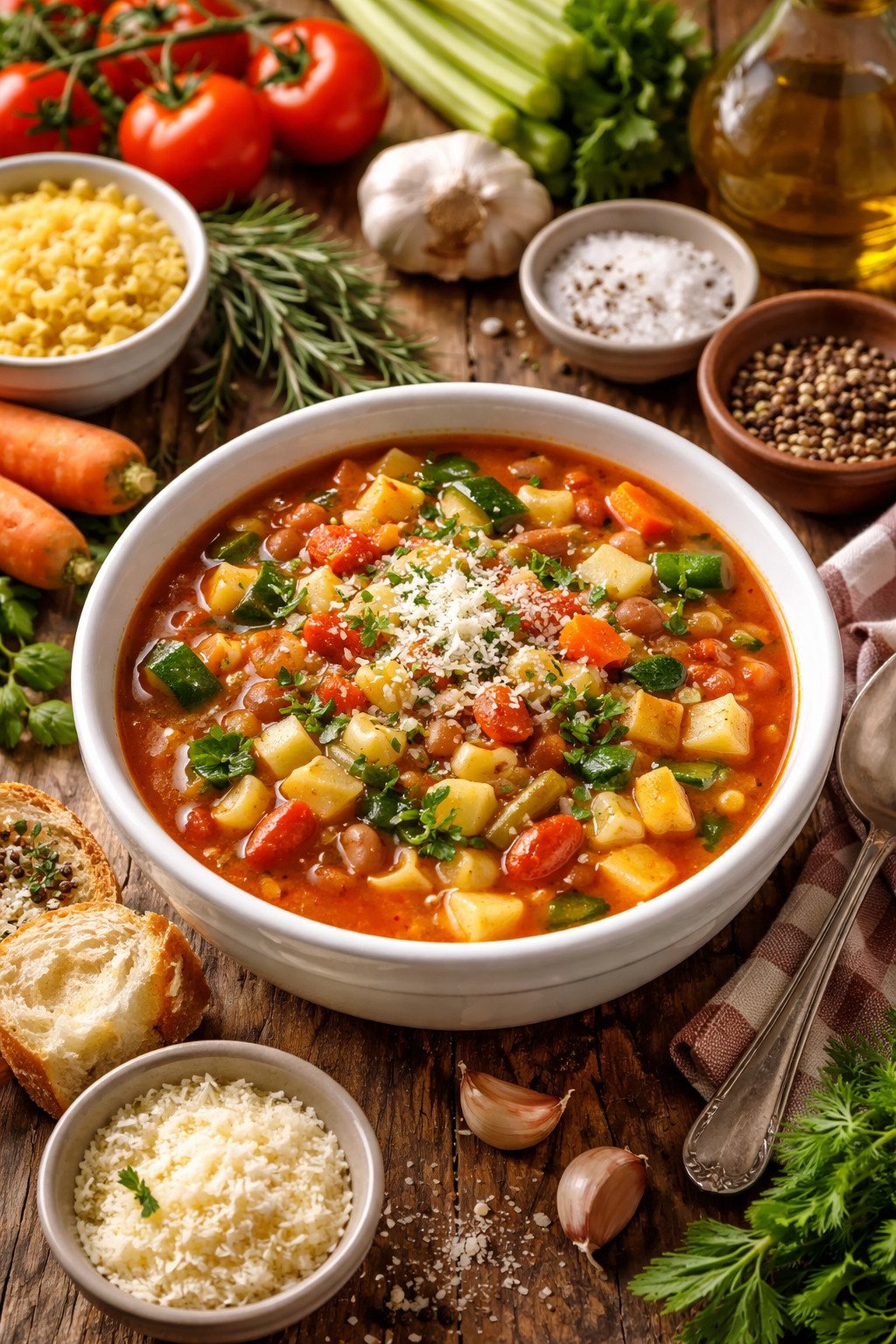
MINESTRONE SOUP
Basic Ingredients of Minestrone Soup
Minestrone Soup is a traditional Italian preparation characterized by the use of fresh vegetables, legumes, and short pasta, cooked in vegetable broth. Its composition is variable, however, the following ingredients represent a widely accepted formulation in contemporary culinary practice.
Main Vegetables
- 2 tablespoons extra virgin olive oil, aromatic fat base
- 1 medium white onion, finely chopped
- 2 garlic cloves, crushed
- 2 medium carrots, cut into small cubes
- 2 celery stalks, thinly sliced
- 1 medium potato, peeled and cubed
- 1 zucchini, cut into uniform cubes
- 1 cup green beans, chopped
- 1 large tomato, chopped, or 200 g crushed natural tomatoes
Legumes and Grains
- 1 cup cooked white beans (cannellini or navy beans), primary plant-based protein source
- ½ cup dry short pasta (ditalini, small elbows, or similar), structural carbohydrate element
Liquids and Aromatics
- 1.5 liters vegetable broth without additives, main cooking medium
- 1 bay leaf, deep aromatic note
- 1 sprig fresh rosemary, distinct herbal character
- Fine salt, to taste
- Ground black pepper, to taste
Optional Final Additions
- Fresh spinach or Swiss chard, finely chopped
- Grated Parmesan cheese, added only when serving
MINESTRONE SOUP INGREDIENTS
| Category | Ingredients | Culinary Function |
|---|---|---|
| Fat base | Olive oil | Aroma conduction |
| Aromatics | Onion, garlic, celery | Flavor construction |
| Vegetables | Carrot, potato, zucchini | Texture and volume |
| Legumes | White beans | Protein contribution |
| Grains | Short pasta | Energy structure |
| Liquid | Vegetable broth | Cooking medium |
| Herbs | Bay leaf, rosemary | Aromatic profile |
| Finishing | Parmesan | Flavor intensification |
PROCEDURE FOR MINESTRONE SOUP
Initial Preparation of Minestrone Soup
Wash all vegetables with potable water. Then, cut each ingredient into uniform sizes. Uniform cutting promotes even cooking and ensures a consistent final texture.
Base Sauté for Minestrone Soup
Heat the olive oil over medium heat. Add the onion and celery. Sauté for five minutes without browning, allowing controlled aroma release. Add the garlic and cook for thirty additional seconds, avoiding burning.
Progressive Cooking of Firm Vegetables in Minestrone Soup
Add the carrot and potato. Stir constantly and cook for three minutes. This order allows denser vegetables to begin cooking in a controlled manner.
Tomato Integration in Minestrone Soup
Add the fresh or crushed tomatoes. Cook for five minutes, until the tomato loses its initial acidity. This step balances the broth’s flavor profile.
Addition of Broth and Herbs in Minestrone Soup
Pour in the hot vegetable broth. Add the bay leaf and rosemary. Bring to a gentle simmer, then reduce to medium-low heat and cook for twenty minutes, partially covered.
Incorporation of Legumes and Tender Vegetables in Minestrone Soup
Add the cooked white beans, green beans, and zucchini. Cook for ten additional minutes. Vegetables must remain firm, never falling apart.
Pasta and Finalization of Minestrone Soup
Add the dry pasta and cook according to the manufacturer’s instructions. Stir frequently, adjust salt and pepper, and remove the herbs before serving.
MINESTRONE SOUP PROCEDURE
| Stage | Main Action | Time |
|---|---|---|
| Sauté | Initial aromatization | 5–6 min |
| Firm vegetables | Start of cooking | 3 min |
| Tomato | Acid balance | 5 min |
| Broth | Main cooking | 20 min |
| Final | Pasta and seasoning | 8–10 min |
TIPS, VARIATIONS, AND ADVICE FOR MINESTRONE SOUP
Technical Advice for Minestrone Soup
Respect vegetable seasonality, as this preparation admits documented regional variations. Control cooking times carefully, because overcooking damages texture and flavor.
Proper Serving of Minestrone Soup
Serve immediately after cooking. The pasta continues absorbing liquid. Add Parmesan only at the end to preserve aroma and flavor.
Safe Storage of Minestrone Soup
Refrigerate in an airtight container for up to forty-eight hours. Reheat over low heat, adding broth if necessary.
MASTER TABLE OF INGREDIENTS, PROCEDURES, AND TIMES
| Stage | Ingredients Involved | Technical Procedure | Estimated Time | Culinary Purpose |
|---|---|---|---|---|
| Initial preparation | All vegetables | Wash with potable water and cut into uniform sizes | 10–15 min | Ensure even cooking and consistent texture |
| Fat base heating | Extra virgin olive oil | Heat over medium heat without smoking | 1 min | Activate aroma conduction |
| Aromatic sauté | Onion, celery | Sauté gently without browning, stirring constantly | 5 min | Build the flavor base |
| Garlic incorporation | Garlic | Add briefly, avoiding burning | 30 sec | Enhance aroma without bitterness |
| Firm vegetables | Carrot, potato | Add and stir continuously | 3 min | Begin controlled cooking of dense vegetables |
| Tomato integration | Fresh or crushed tomato | Cook until initial acidity softens | 5 min | Balance the broth’s flavor profile |
| Main liquid | Vegetable broth | Pour in hot and bring to gentle simmer | 2 min | Unify ingredients |
| Herbs | Bay leaf, rosemary | Add together with broth | — | Create a stable aromatic profile |
| Primary simmering | Full base | Cook partially covered | 20 min | Develop depth of flavor |
| Legumes | Cooked white beans | Add to the soup | — | Provide protein and body |
| Tender vegetables | Green beans, zucchini | Add near the end | 10 min | Preserve firmness and structure |
| Pasta | Short dry pasta | Add and stir frequently | 8–10 min | Provide structure and satiety |
| Final seasoning | Salt, black pepper | Adjust to taste | 1 min | Achieve flavor balance |
| Herb removal | Bay leaf, rosemary | Remove before serving | — | Prevent overpowering flavors |
| Serving | Parmesan cheese (optional) | Add at the table | — | Enhance final flavor |
TOTAL ESTIMATED TIME
- Preparation: 15 minutes
- Cooking: 50–55 minutes
- Total time: 65–70 minutes
